
Unfitted Kitchen Ideas to Create a Charming, Creative Space
There’s something comforting about a kitchen that doesn’t feel overly polished or overly planned. If you’ve been craving a softer, more lived in and collected approach to kitchen design, unfitted kitchen ideas might be exactly what your home is asking for.
The concept of an unfitted kitchen is very simple. Instead of wall-to-wall built-in cabinetry and perfectly matching units, you create your kitchen space using freestanding furniture, individual pieces, and standalone elements that feel layered and lived-in. It’s a charming, creative (and cost-effective!) alternative to the standard kitchen. And it brings eclectic warmth into the heart of the home.
Let’s talk about how to make this style work in a natural, encouraging way.
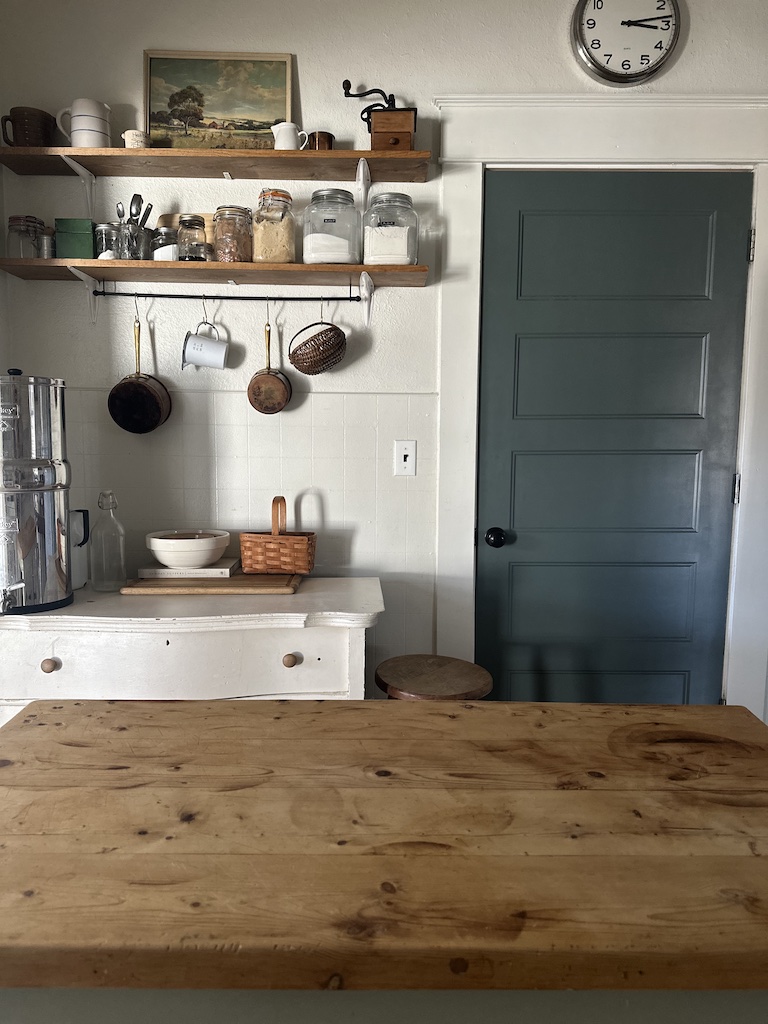
What Is an Unfitted Kitchen?
Before the rise of fitted cabinetry and mass production in the mid-20th century, kitchens were not designed as one seamless installation. In fact, if you’ve ever wondered is unfitted kitchens have ver been popular popular, the answer is yes. For generations, kitchens were composed of furniture pieces: a rustic wooden table, a prep table, antique worktables, and standalone cupboards.
It wasn’t until the 1920s that the idea of efficiency-driven, built-in units became mainstream. By the late 20th century, the mainstream adoption of the fitted kitchen had taken over, and typical cabinetry became the norm.
But now? Interior designers are gently shifting back. There’s a quiet return to rustic cottage-like country kitchens, a less uniform look, and a more eco-minded approach to home design.
Check out more Unfitted Kitchen Ideas over on my Pinterest
Elements of an Unfitted Kitchen
If you’re new to this design and don’t know what defines this style, here are the hallmark elements of an unfitted kitchen:
- Freestanding furniture instead of built-in cabinets
- Tables rather than one fixed center island
- Freestanding kitchen islands or a butcher’s block
- Antique brass pulls or antique brass cabinet pulls
- A farmhouse sink as a focal point
- Open shelving instead of upper built-in cabinetry
- Standalone elements that feel collected over time
Instead of one cohesive wall of storage space, you get individual pieces working together in harmony. It’s a non-uniform cooking space style but in the best way.
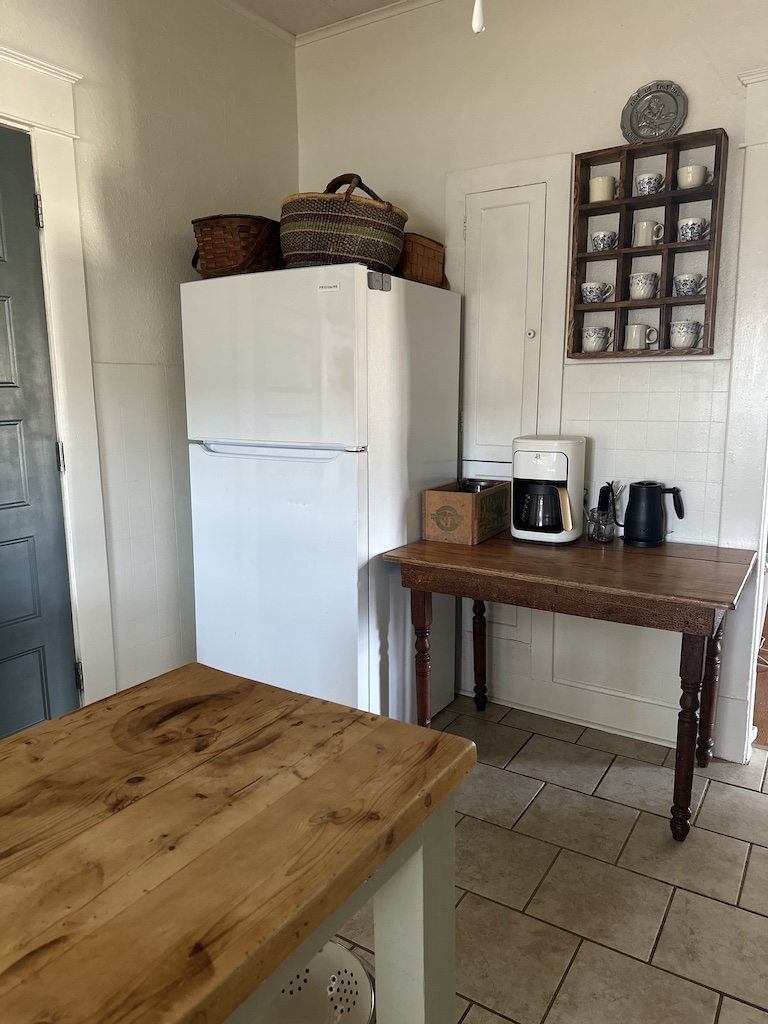
Why Designers Are Loving It Again
Publications like Apartment Therapy have highlighted the rise of open shelving and the desire for greater flexibility in modern homes. They share that homeowners are increasingly looking for kitchens that reflect their signature style rather than the latest trends.
Other designers have embraced freestanding kitchen islands and butcher blocks as a more modern way to soften traditional layouts.
Why the shift? Because people want warmth. They want better use of the space. They want kitchens that feel like part of the living room not just a sterile prep zone lined in stainless steel.
More kitchen Ideas: Ideas, Tips, and Cost of a Small Kitchen Renovation
1. Start with a Freestanding Piece
One of the best style advice tips I can give you is this. Don’t rip everything out. Instead, introduce one freestanding piece.
Maybe it’s:
- An old farmhouse table as your prep table
- Rustic wooden table in the center instead of a center island
- Butcher blocks station tucked near the kitchen sink
- A vintage cabinet with unique finishes from flea markets
This is a great way to test the waters without committing to a full kitchen renovation.
2. Replace Built-In Units with Furniture Pieces
Instead of adding more built-in cabinets, consider swapping one section for standalone elements.
Could lower wood cabinets pair beautifully with open shelving above? Could you incorporate open shelving in place of upper cabinet doors?
The rise of open shelving over the past couple of years has made it easier than ever to embrace this style. It lightens the visual weight of your kitchen space and creates room for decorative elements and well-loved pieces.
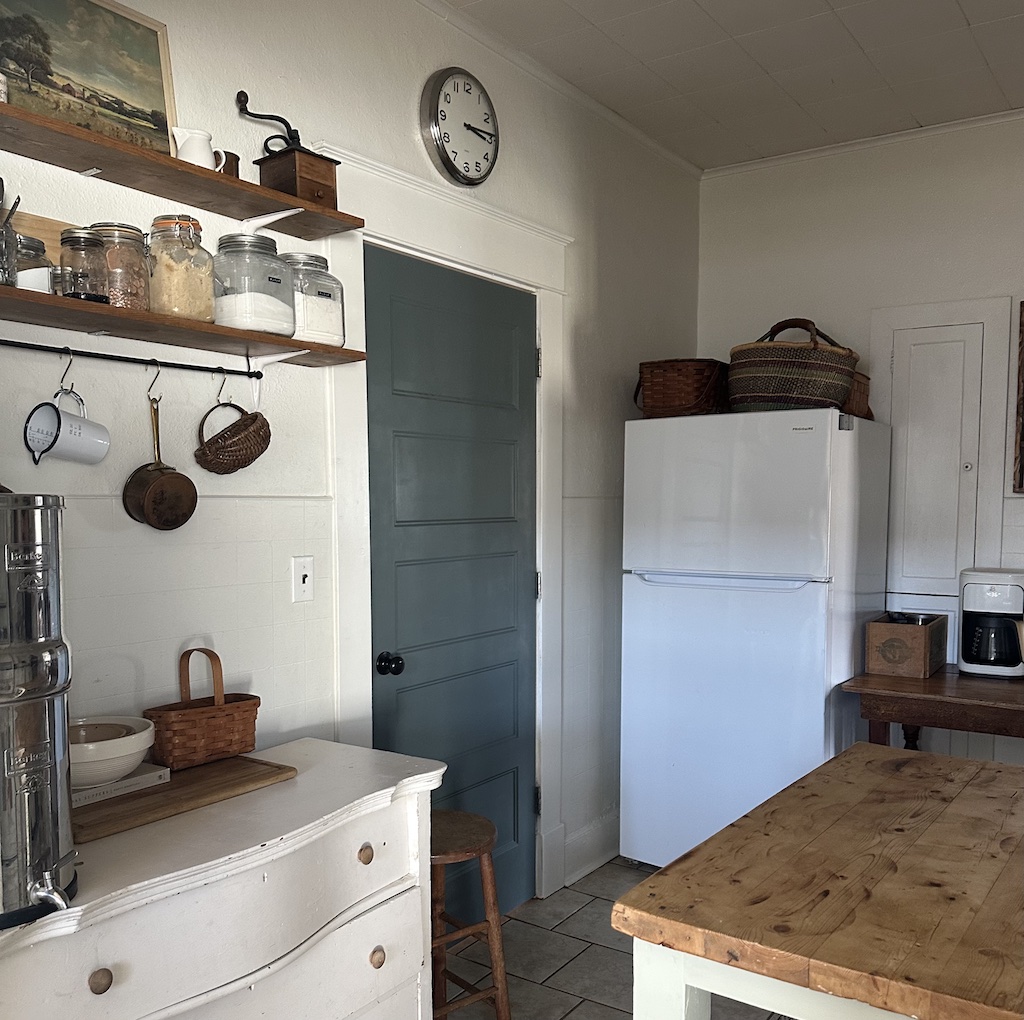
3. Let Your Table Be the Focal Point
In unfitted kitchens of the past, the table was everything.
Rather than a polished center island, consider:
- An antique worktable
- Butcher’s block
- Tables pushed together
- An old farmhouse table surrounded by industrial metal stools
This approach feels especially right in a small kitchen where built-in cabinetry can feel heavy. A freestanding prep table can make more sense spatially and visually.
Related Post: Create a Cozy Kitchen
4. Mix Modern Elements with History
An unfitted kitchen doesn’t mean abandoning all modern conveniences. You can absolutely pair a farmhouse sink with stainless steel appliances. You can keep your unattached appliances but surround them with warmth.
Try:
- Antique brass pulls on cabinet doors
- Statement lighting over a rustic wooden table
- Stone walls or textured backsplashes
- Explosions of warm color in painted wood cabinets
The key is thoughtful design decisions rather than uniformity.
5. Shop Secondhand and Sustainably
One of the main pros of an unfitted kitchen is the importance of sustainability and budget.
Because you’re sourcing individual pieces, you can:
- Shop secondhand marketplace
- Visit flea markets
- Look for well-loved pieces
- Avoid mass production
This is a more eco-minded approach that honors country living and reduces waste. Instead of tearing out perfectly good kitchen units, you adapt your current kitchen. We chose to keep our build in cabinets that are original to our home, and then add a few free standing pieces to add character.
The unfitted kitchen’s adaptability allows you to evolve over time, adding furniture pieces as you find them in the best places, like estate sales, antique stores, local listings.
6. Embrace a Less Uniform Look
If you’re used to traditional layouts with fitted cabinetry, this shift may feel bold.
But remember that cohesion doesn’t require everything to be the same.
A cohesive look can come from:
- Repeating metal finishes like antique brass cabinet pulls
- Choosing similar wood tones
- Keeping a consistent color palette
- Layering eclectic decor thoughtfully
Remember that charming kitchens are the ones that evolve, not the ones installed in one afternoon.
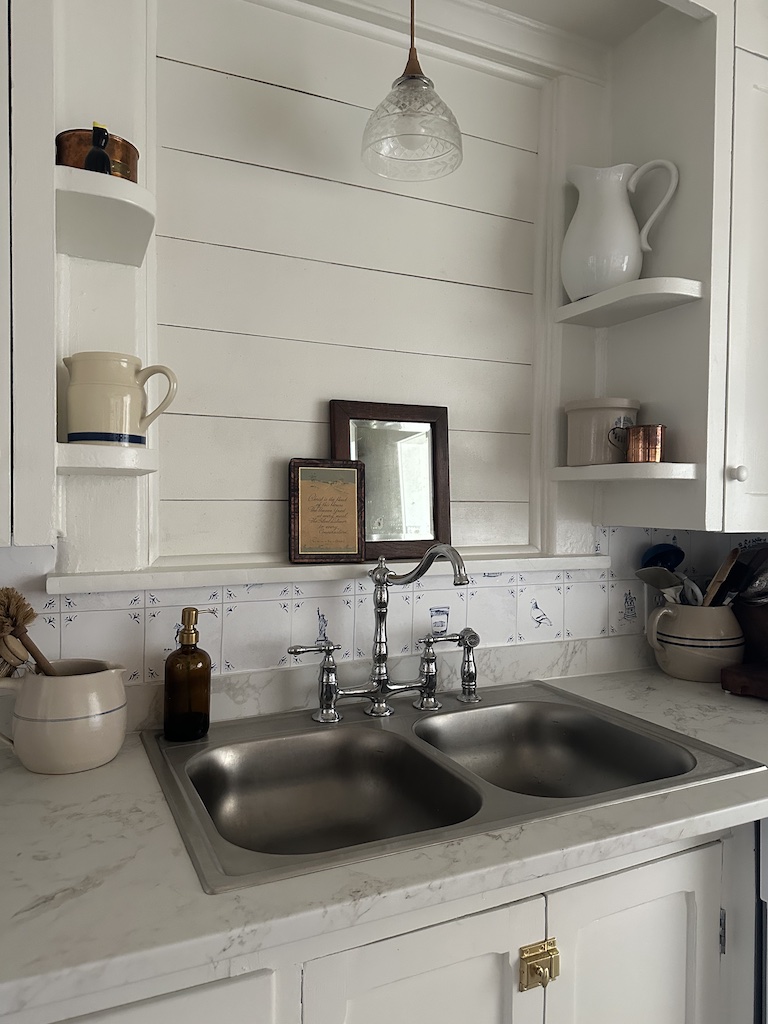
7. Think Beyond the “Standard Kitchen”
The standard kitchen of the late 20th century emphasized efficiency, built-in cabinetry, and typical cabinetry configurations. It made sense for mass housing and streamlined design plans.
But today, many homeowners want something softer.
Unfitted kitchen ideas invite you to slow down your kitchen design. They align beautifully with a slow decorating style by adding pieces gradually rather than committing to a complete overhaul.
This makes perfect sense in a new home where you’re still discovering how you live in the space.
8. Consider Your Prep Spaces Carefully
One common concern is functionality.
Will there be enough prep spaces? Enough storage space?
The answer depends on your layout.
Freestanding kitchen islands and butcher’s block tables can provide ample prep surface. Open shelving keeps kitchen items accessible. And adding one extra freestanding piece can actually create better use of the space than bulky built-in cabinets.
Greater flexibility is one of the main pros of an unfitted kitchen.
Is This Style Right for You?
If you love:
- Rustic cottage-like country kitchens
- Eclectic decor
- Furniture pieces that tell a story
- A less uniform look
- Mixing old and modern elements
Then unfitted kitchen ideas might be exactly your direction. This isn’t about chasing the latest trends. It’s about creating a charming, creative space that reflects your style.
Final Encouragement for Unfitted Kitchen Ideas
Your kitchen doesn’t have to look like a showroom. It doesn’t have to follow the mainstream “official Instagram” kitchen model.
It can feel layered. Personal. A little imperfect. Full of character.
You don’t need a full kitchen renovation to begin. Start with one freestanding piece. Add a butcher’s block. Swap cabinet doors for open shelving. Bring in antique brass pulls.
Let your kitchen design unfold slowly because sometimes the most beautiful spaces aren’t built all at once, they’re gathered over time. They are filled with well-loved pieces, and shaped by real life. And truly, that kind of kitchen will always feel like home to me!
